
Home /
A Creative Way to Develop House Rules in Blended Families
With the divorce rate at over 50%, children from those relationships are increasingly becoming part of blended families. This trend means that many children experience unique challenges, especially around establishing household rules and expectations. Several factors can make managing a blended family household complex.
Here are a few common challenges children in blended families may face:
- Different Rules at Each Home: When one parent is more permissive or strict than the other, it can create confusion for a child. They may struggle to understand expectations as they move between households.
- Varying Bedroom Accommodations: At one home, a child may have their own room and bed. At another, they might have to share. This can affect their sense of personal space and comfort.
- Changes in Birth Order: A child might be the oldest in one home but a middle or youngest child in the other. This shift can impact their sense of inclusion and confuse their role within the family.
- Personality Clashes with Stepsiblings: As two families merge, some children may not be open to welcoming new people into their living spaces. Their reactions can vary based on age and personality, sometimes leading to friction, conflict, and stress.
- Fluctuating Household Routines: Co-parenting visitation agreements mean the household can change frequently. For example, stepsiblings may only be together on weekends or on a one-week-on, one-week-off schedule. This inconsistency can make it difficult for some children to settle in.
The Purpose of Family Rules
Family rules help caregivers and children establish consistent guidelines so everyone knows what is expected of them. They encourage family members to take responsibility for their actions and become contributing members of the household. Clear rules teach cooperation and make living together more pleasant.
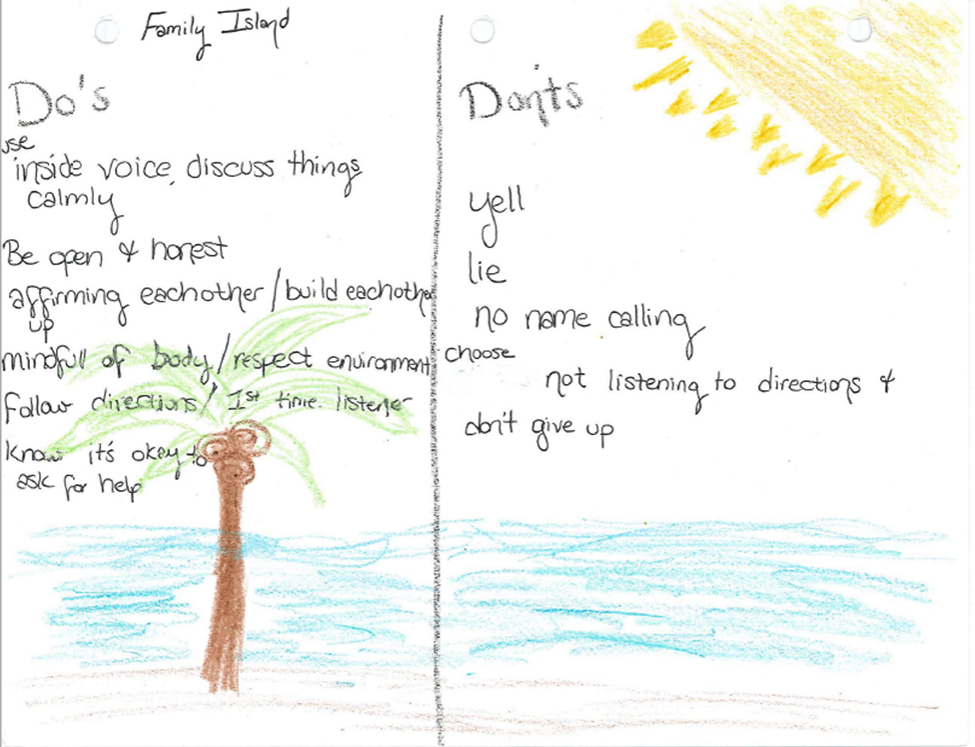
When everyone has input into how the family operates, it sets a standard for acceptable behavior. These rules apply to everyone in the family, and it’s important that everyone helps create them. They should include both “DOs” and “DON’Ts.” If you tell a child not to do something, it is helpful to also explain what they should do instead. By modeling the rules themselves, parents and caregivers can promote cooperative behavior and use their authority in a nurturing way.
Create Your Own Family Island
A wonderful activity for blended families is to create a “Family Island.” Think of your family as its own little island nation, with a unique culture, set of values, and morals. Your family rules can be the governing document for this island.
The goal is to work together to create your Family Island, reflecting on shared values, traits, and interests. This can be a fun, collaborative process that involves everyone. Imagery and art can be fantastic ways for children to express themselves. This document can also be updated as new conflicts arise and need to be discussed. It’s a creative way to engage your children and make sure they feel included in building your new family’s foundation.
Location Finder
Events
Follow Us