Home /
Buddy Check Week Interview with Jeremy Lile
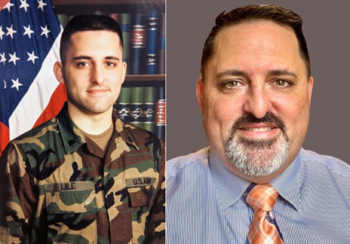
Jeremy Lile, a Veteran Care Navigator Team Lead for Centerstone’s Military Services, and an Army veteran who served the bulk of his eight years as a Battalion Operations NCO, knows firsthand the importance of connection. During his time in uniform, he trained soldiers, developed leaders, and carried responsibilities that shaped him long after service.
Today, he continues to carry the bond of belonging to a community that understands both the visible and invisible scars of military life.
For Jeremy, “checking in on someone is one of the most important things we can do, both as veterans and as human beings.”
That belief became deeply personal when a close friend’s persistence saved his life. Jeremy recalls a time when he was personally struggling. But his lifelong friend Maxx didn’t stop calling, texting, and eventually alerting Jeremy’s wife when he couldn’t get through. That steady insistence disrupted the moment and gave Jeremy a chance to survive. “Maxx’s persistence saved my life,” Jeremy shares.
He encourages others to keep Buddy Checks simple: ask about sports, pets, or even just the weather. The conversation itself matters far more than the words. “Even the smallest act of kindness like a phone call, a text message, or a visit can remind a veteran that they are seen, valued, and not alone,” he says.
Jeremy’s story is a powerful reminder for all of us: reaching out can truly make the difference between despair and hope.
For veterans in particular, a Buddy Check is more than a friendly gesture—it is a lifeline.
Interview Questions:
- Q: Please share a little about your military service: what branch, when did you serve, and in what capacity?
A: I served in the Army for eight years. For most of my military career, I worked as a Battalion Operations NCO. I developed training plans to ensure our battalion was always mission ready. I analyzed data for personnel assignments, personnel readiness, and strength levels. I managed personnel services which encompassed everything from handling evaluations to assisting soldiers with their administrative needs. This part of my job provided a unique opportunity to mentor young leaders and contribute to their professional development. I also assisted with line of duty investigations and was one of the unit’s certified Combat Life Saver Trainers.
- Q: What does being part of the veteran community mean to you today?
A: Being a veteran means belonging to a community of individuals who made the selfless decision to serve their country. It is a bond shared by people who, regardless of their role or rank, were changed by their time in uniform. Most did not return as heroes but as everyday people carrying invisible scars and, at times, visible wounds.
- Q: Do you think it’s important for veterans to check in on one another?
A: Checking in on someone is one of the most important things we can do, both as veterans and as human beings. For those of us who have served, it is vital that we stay connected with our fellow veterans. Do not wait until someone is in crisis or on the edge of hopelessness. We all need to work on being kind and showing sincere empathy and compassion. My grandfather used to say, “Someone always has it worse than you.” That simple truth reminds us to look beyond ourselves and be present for others.
- Q: Have you had a personal experience you are willing to share where a Buddy Check made a real difference for you or someone you know?
A: I have struggled with depression for years. Two separate times in my life I have attempted to take my own life, and the second time was different. It was not impulsive but planned out. I had mapped out every detail: the location, the timing, the tools. I knew my wife and children would be gone that certain Saturday afternoon, giving me the time alone I needed. I had even stopped talking to Maxx, my closest friend since kindergarten. He had been checking in regularly, offering encouragement and support. But over time, his concern began to feel exhausting. Eventually I broke off all communication. That day, I sat in my garage and followed my plan step by step. I was prepared to die. Then my phone rang, and it was Maxx. I ignored it and let it go to voicemail. He called again and again. Then came the flood of text messages one after another. I did not respond because I was too tired to explain myself. Just as I was about to go through with it, there was a knock at the door. A FedEx delivery driver needed me to sign for a package. Moments later, my wife came home unexpectedly. Maxx had reached out to her, telling her he was worried. And so, she rushed back home. Maxx’s persistence saved my life.
- Q: What are some simple ways people can start a Buddy Check if they’re not sure what to say?
A: Ask them about topics they enjoy like sports, fishing, hunting, professional wrestling, or TV and movies. If appropriate, bring up their spouse, partner, kids, or pets. At the very least, comment on the weather since most everyone can relate to how unreliable the weather person tends to be.
- Q: In your opinion, how does something like Buddy Check support veteran mental health and suicide prevention?
A: Depression can create a profound sense of isolation, often leaving individuals, especially veterans, feeling as though their pain is invisible and that no one understands or cares. These feelings can intensify to the point where life feels unbearable. This is where a Buddy Check is vital. Even the smallest act of kindness like a phone call, a text message, or a visit can remind a veteran that they are seen, valued, and not alone. It reinforces the message that someone cares, and
Location Finder
Events
Follow Us